
TRAVA RUSA Chelidonium majus (Papaveraceae)

TRAVA RUSA Chelidonium majus (Papaveraceae)
Die Urtinktur enthält mindestens 0,06 und höchstens 0,20 Prozent Alkaloide, berechnet als Chelidonin (C20H19NO5; Mr 353,4).
Herstellung
Urtinktur und flüssige Verdünnungen nach Vorschrift 3a
Eigenschaften
Die Urtinktur ist eine braungelbe Flüssigkeit.
Prüfung auf Identität
Dünnschichtchromatographie (2.2.27)
Chelidonium majus
српски: Trava Rusa
azərbaycanca: Dəmrovotu, Chelidonium
башҡортса: Сөйәл үләне
беларуская: Падтыннік вялікі
български: змийско мляко, Chelidonium
català: Celidònia, Chelidonium, Berruguera, Herba berruguera, Herba d’orenetes
čeština: vlaštovičník větší, vlaštovičník
Cymraeg: llysiau‘r wennol
dansk: Svaleurt
Deutsch: Schöllkraut, Schellkraut
English: Greater celandine
Esperanto: Kelidonio
español: celidonia mayor, hierba golondrinera, cedueña, celdueña, celedonia, celedonio, celidonia, celidoña, celidueña, celidueña fina, cerdoña, cerdueña, ceredonia, ceredueña, ceridonia, ceridoña, ceridueña, cerigüeña, ceruda, cevuda, chiledonia, ciledonia, cilidonia, cilidueña, cirgüeña, ciridueña, cirigüeña, cirigüeya, cirirueña, dilidonia, flor de la golondrina, golondrinera, gran luz, hierba de la golondrina, hierba de las golondrinas, hierba de las verrugas, hierba del iodo, hierba verruguera, hirundinaria, pedigüeña, piohuelo, planta del yodo, quitaverrugas, selidonia, verrugera, verruguera, yerba de las golondrinas, yerba del pordiosero, yerba verruguera, yeteira
eesti: Vereurmarohi, Harilik vereurmarohi, Chelidonium maius
euskara: Zaran-belar, Enara-belar
فارسی: مامیران بزرگ
suomi: Keltamo
arpetan: Felogne
français: Chélidoine, Verrucaire, Grande chélidoine, Quélidoine, Herbe aux verrues, Chelidonium, Chelidoine, Herbe à verrues, Kélidoine
hrvatski: Rosopas
hornjoserbsce: Krawnik
magyar: Vérehulló fecskefű
հայերեն: կանթեղախոտ
italiano: Celidonia, Chelidonium
日本語: クサノオウ
ქართული: ქრისტესისხლა
қазақша: Үлкен сүйелшөп
한국어: 애기똥풀, 젖풀, 애기똥풀속
lietuvių: Didžioji ugniažolė
latviešu: Lielā strutene, Vandulis, Kārpu zāle
македонски: Змиско млеко, руса
кырык мары: Цӱцӱшуды
Nederlands: Stinkende Gouwe, Chelidonium
ирон: Чъехаг сырхыхос
polski: Glistnik jaskółcze ziele, Chelidonium, Glistnik jaskółczy, Glistnik
پنجابی: چیلیڈونیم
português: quelidónia-maior
română: Rostopască, Rostopasca
русский: Чистотел большой, Подтынник
саха тыла: Хараҥаччы ото
srpskohrvatski / српскохрватски: Rusa, Lastavičina suza, Lišavica, Lastina trava, Zmijino mlijeko, Rosopas, Zmijino mleko
slovenčina: lastovičník väčší
slovenščina: Krvavi mlečnik, Chelidonium
shqip: Latrapeci
српски / srpski: руса, Росопас
svenska: Skelört
Türkçe: Kırlangıç otu, Temre otu
українська: Чистотіл звичайний, Чистотіл великий, Чистотіл
中文(简体): 白屈莱属
中文(繁體): 白屈萊屬
中文(臺灣): 白屈萊屬
中文: 白屈菜
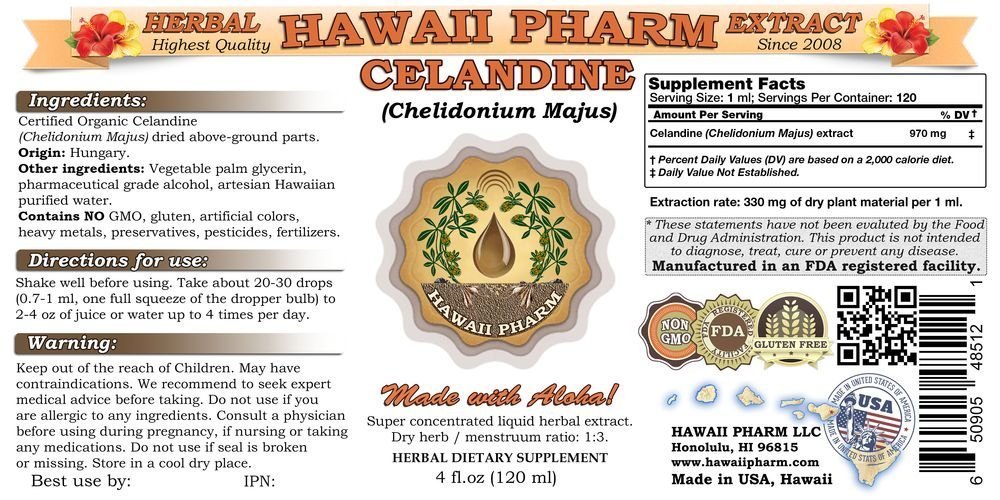
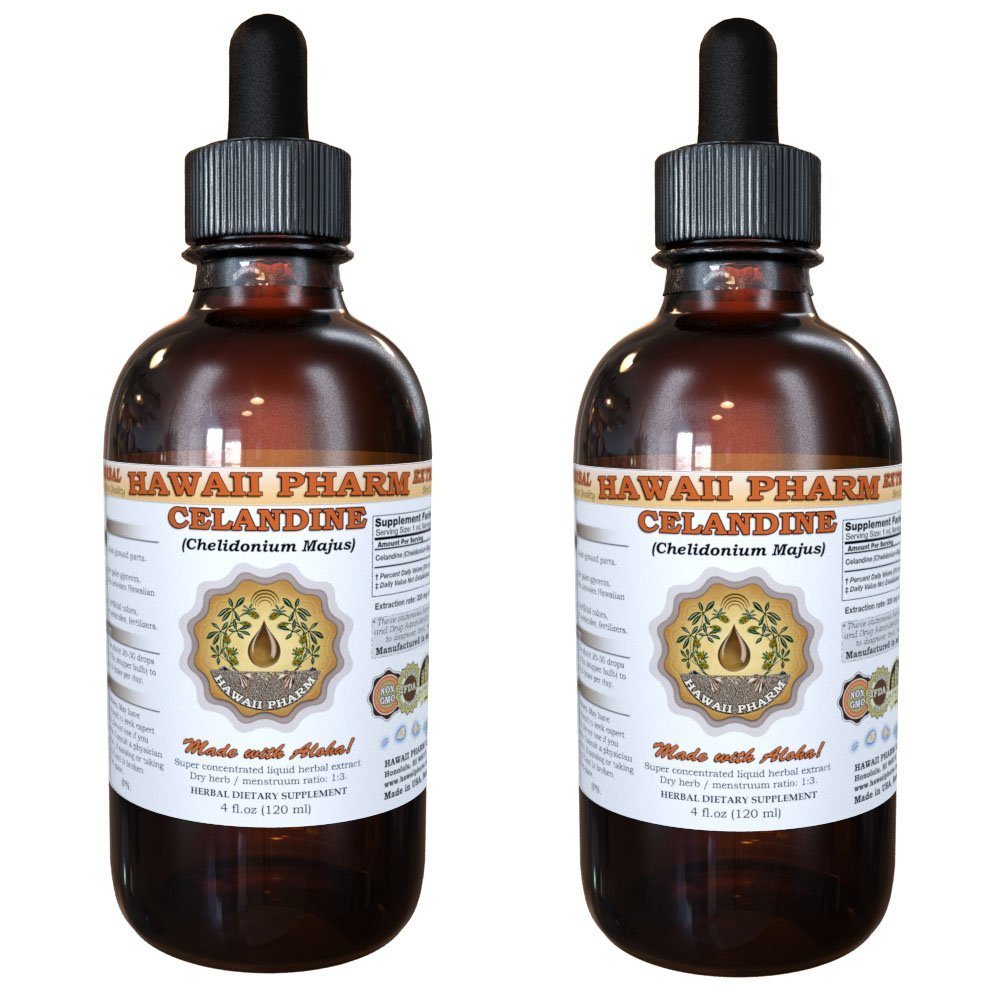
Celandine Leaf (Chelidonium majus Papaveraceae)
Celandine Leaf Tinctures-Liquid Herbal Extracts
Greater Celandine, known botanically as Chelidonium majus (Papaveraceae), is an herbal supplement that may be helpful in treating severe hepatic illnesses, biliary, and renal diseases, and for easing liver and bile pains. According to the American Cancer Society, Celandine has been used to treat numerous health problems, including intestinal and digestive problems, and eye irritation. Chelidonium majus (Papaveraceae) has been reputed to treat gallstones and gallbladder pain. It has an agent that helps to gradually and favorably alter the course of an ailment or condition and it also helps to alter the process of nutrition and excretion and restore normal bodily function. Chelidonium majus (Papaveraceae) herbal extract has been used to ease inflammation of gout, arthritis, eczema, psoriasis, rheumatism and scrofulous diseases. Scientific research indicates that the herb’s orange-yellow sap contains alkaloids that combat viruses, bacteria, and fungi. Today the herbal tincture is used to remove cancerous tumors, tubercular skin lesions, fistulas, breast lumps, swelling, moles, ringworm, corns, calluses and warts Chelidonium majus (Papaveraceae) is also a mild sedative which has been used historically for asthma, bronchitis, chronic tonsillitis and whooping cough. The tincture has also been used for facial, head and shoulder neuralgia.
Having a depurative property that purifies and detoxifies the liver and purifies the blood. The properties of this extract act to cleanse and stimulate the efficient removal of waste products from the system. Chelidonium majus (Papaveraceae) is a hepatoprotective or a substance that supports normal liver function and protects the liver cells from damage. It is used to treat chronic liver disease and reduces inflammation and congestion in the liver, which may help prevent or treat liver fibrosis and jaundice. Chelidonium majus (Papaveraceae) may both stimulate and relax the gallbladder, in Europe, it is the belief that minor gall bladder problems cause indigestion. Chelidonium majus (Papaveraceae)has been found to stimulate the flow of bile and pancreatic enzymes in treating biliary inflammation and obstruction, gallstones and infection, and hepatitis. It has been approved by the Commission E as a treatment for what we call dyspepsia, or digestive distress. People with impaired liver function should only use this herb under the supervision of a healthcare professional.
Digestive problems and intestinal issues typically marked by a nauseating feeling and stomach cramps may be resolved using Celandine herb. The extracts of Chelidonium majus (Papaveraceae) stimulate a cramp relieving action that helps to ease indigestion symptoms. The herbal extract can also help in healing stomach ulcers. The herb prompts the body to release more digestive enzymes, which helps improve overall digestion. People suffering from intestinal disorders like irritable bowel syndrome (IBS) might also find some relief from the intake of Chelidonium majus (Papaveraceae).
The primary components of Chelidonium majus (Papaveraceae) are alkaloids that have a very high medicinal value. In animal and human studies these alkaloids displayed, anti-inflammatory, antimicrobial and anticancer activity, that showed some success in treating several types and sites of cancer, including breast, cervical, colorectal, esophageal, ovarian, testicular and urethral cancers; malignant melanoma, optic nerve astrocytoma and Kaposi’s sarcoma in patients with AIDS.
It has been used to lower blood pressure and may also be used as a mild diuretic. Chelidonine produces mild but a prolonged lowering of arterial blood pressure increases the production of urine and inhibits or delays the development of anaphylactic shock.
Chelidonium majus (Papaveraceae) supports heart health by lowering both blood pressure and cholesterol. Animal studies suggest that Celandine extracts might be useful to treat such heart ailments such as arteriosclerosis, in which the arteries become hard and narrow due to cholesterol buildup.
This herb is also a nervous system depressant and a mild sedative. Like the poppy, Chelidonium majus (Papaveraceae) has narcotic properties and is only ever used small doses. As a sedative, it aids sleeplessness, reduces tension and anxiety and relieves pain. It is given for debility and drowsiness that tends to occur after eating or sleeping and is given for paralysis.
Chelidonium majus (Papaveraceae) is believed to be effective in the treatment of an incurable herpes simplex virus. Chelidonium majus (Papaveraceae) contains proteolytic enzymes that can inhibit viruses and possibly kill them. Chelidonium majus (Papaveraceae) tincture, when used externally, has been a traditional treatment for centuries to remove ringworms, moles, calluses, corns, scabies and other chronic skin disorders such as eczema. External applications of Chelidonium majus (Papaveraceae) in an ointment may help clear away infections. Recent clinical trials from Russia and China have reported that a tincture of Chelidonium majus (Papaveraceae) exhibited antiviral properties and was successful when applied topically for the removal of warts, papillomas (HPV), skin tags and other skin malformations.
The herb has a long history of use for eyesight problems, this holds good for defective vision and is a prophylactic for healthy but strained eyes. Chelidonium majus (Papaveraceae) herbal extract is used topically for eye inflammations and cataracts and spots on the cornea may disappear gradually when the diluted extract is brushed gently over closed eyelids towards the corners. The dilution may even help in cases of a bleeding or detached retina.
Ingredients: Celandine Leaf, Structured Water, 96% Alcohol.
Non-Alcohol: Celandine Leaf, Structured Water, and Vegetable Glycerin.
All of our ingredients are Certified Organic, Kosher, or Responsibly Wildcrafted. No genetically modified organisms (GMO’s) are involved. All other products that are distributed by us meet our high-quality standards.
Instructions: Use 10-20 drops in juice or water, under the tongue, or as desired. May be taken 2 – 4 times daily. Shake well. Store in cool, dark place. Keep out of reach of children.
Contraindications: Celandine Herbal Supplement carries strong warnings and is subject to restrictions in some countries and may cause severe irritation of the mucous membranes. Pregnant and nursing women should never use this herb, nor should children or those who have liver disease. Its use should always be carried out under the care of a qualified healthcare practitioner. Chelerythrine, an ingredient in Chelidonium majus (Papaveraceae), is a narcotic, and excess use causes sleepiness and coughing. Note: Greater Celandine should never be confused with Lesser Celandine – an entirely different plant with different applications.
Disclaimer: The information presented herein by Herbal Alchemy is intended for educational purposes only. These statements have not been evaluated by the FDA and are not intended to diagnose, cure, treat or prevent disease. Individual results may vary, and before using any supplements, it is always advisable to consult with your own healthcare provider.
| Chelidonium majus (Papaveraceae)Common name: Celandine | Activities: 249Chemicals w/Activities: 20 Chemicals: 43 | ActivityHow used: Medicinal |
| PesticideAntibacterialHypotensiveAntisepticIrritantAntitumorAntiviralAntiinflammatory
Analgesic Hypertensive Antispasmodic Antiaggregant Lipase-Inhibitor Calcium-Antagonist Sedative Candidicide Antiarrhythmic Antineoplastic Fungicide Antimitotic |
VasodilatorAntitussiveMolluscicideMycobactericideAntitubercularDiureticGram(+)icideAntiacetylcholinesterase
Cytotoxic Cardiovascular Immunostimulant Antiangiogenic Antitrypanosomic 5-Lipoxygenase-Inhibitor Trichomonicide Antichilblain Hypoglycemic Myorelaxant Antioxidant Synergist Glaucomagenic |
AntialzheimeranAnestheticDNA-IntercalatorAllergenicAnticirrhoticCardiotonicParalyticBruchiphobe
Nematicide Gram(-)icide Astringent Antiatherosclerotic Antiedemic Emetic Uterotonic Toxic Hypocholesterolemic 12-Lipoxygenase-Inhibitor Occulotensive CNS-Depressant |
Reference:
Merck 11th Edition
Martindale’s 29th
Zebovitz, T. C. Ed. 1989. Part VII. Flavor and Fragrance Substances, in Keith L. H. and Walters, D.B., eds. Compendium of Safety Data Sheets for Research and Industrial Chemicals. VCH Publishers, New York. 3560-4253.
Lewis and Elvin-Lewis, Medical Botany, ca 1977
Vlietinck, A.J. and Dommisse, R.A. eds. 1985. Advances in Medicinal Plant Research. Wiss. Verlag. Stuttgart.
Huang, K. C. 1993. The Pharmacology of Chinese Herbs. CRC Press, Boca Raton, FL 388 pp.
Medline (post 1990 searches filed in my computer)
Bruneton, J. 1999. Pharmacognosy, Phytochemistry, Medicinal Plants. 2nd Ed. Lavoisier Publishing, Paris. 1119 pp.
Wichtl, M. 1984. Teedrogen. Ein Handbuch fur Apotheker und Arzte. Wissenschaftliche Verlagsgesellscharft. mbH Stuttgart. 393 pp.
Huang, K. C. 1993. The Pharmacology of Chinese Herbs. CRC Press, Boca Raton, FL 388 pp.
Williamson, E. M. and Evans, F. J., Potter’s New Cyclopaedia of Botanical Drugs and Preparations, Revised Ed., Saffron Walden, the C. W. Daniel Co., Ltd., Essex UK, 362 pp, 1988, reprint 1989.
Jeffery B. Harborne and H. Baxter, eds. 1983. Phytochemical Dictionary. A Handbook of Bioactive Compounds from Plants. Taylor & Frost, London. 791 pp.
Borchard, R. E., Barnes, C. D., and Eltherton, L. G. 1991. Drug Dosage in Laboratory Animals: A Handbook. (3rd Ed.) The Telford Press, Inc., P. O. Box 287, Caldwell NJ 07006.
Williamson, E. M. and Evans, F. J., Potter’s New Cyclopaedia of Botanical Drugs and Preparations, Revised Ed., Saffron Walden, the C. W. Daniel Co., Ltd., Essex UK, 362 pp, 1988, reprint 1989.
Mills, Simon and Bone, Kerry. 2000. Phytotherapy. Churchill Livinston, Edinburgh.
Neuwinger, H. D. 1996. African Ethnobotany – Poisons and Drugs. Chapman & Hall, New York. 941 pp.
Jacobson, M., Glossary of Plant-Derived Insect Deterrents, CRC Press, Inc., Boca Raton, FL, 213 p, 1990.
Nigg, H.N. and Seigler, D.S., eds. 1992. Phytochemical Resources for Medicine and Agriculture. Plenum Press, New York. 445 pp.
Newall, C. A., Anderson, L. A. and Phillipson, J. D. 1996. Herbal Medicine – A Guide for Health-care Professionals. The Pharmaceutical Press, London. 296pp.
Davies, S., and Stewart, A. 1990. Nutritional Medicine. Avon Books, New York. 509pp.
Mills, Simon and Bone, Kerry. 2000. Phytotherapy. Churchill Livinston, Edinburgh.