
Rusomača – Capsella bursa-pastoris (Brassicaceae)
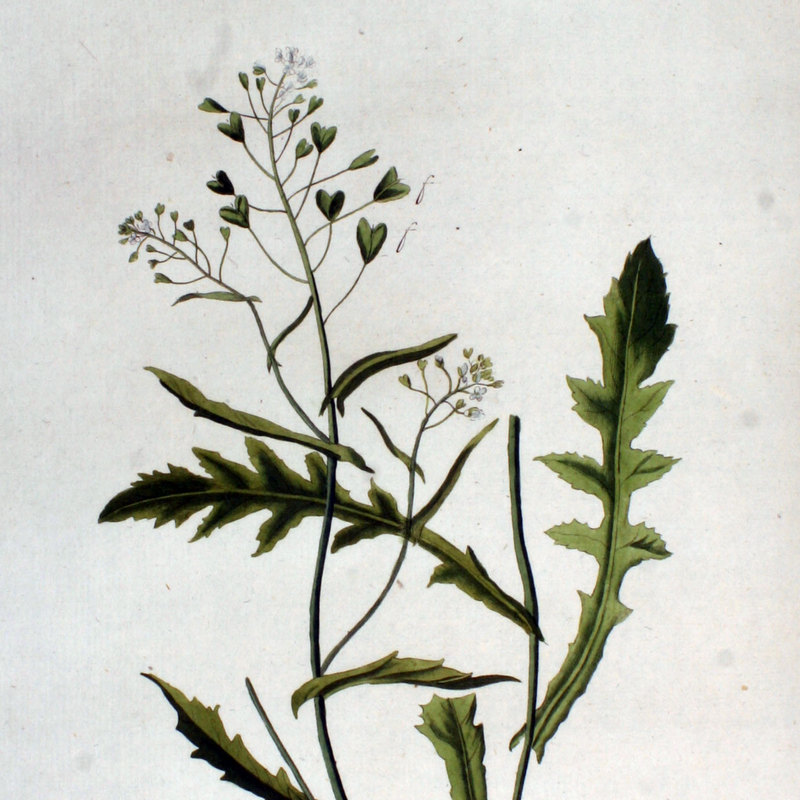
Rusomača – Capsella bursa-pastoris (Brassicaceae)
12 July 2011, EMA/HMPC/262766/2010, Committee on Herbal Medicinal Products (HMPC):
Community herbal monograph on Capsella bursa-pastoris (L.) Medikus, herba
12 July 2011, EMA/HMPC/262767/2010, Committee on Herbal Medicinal Products (HMPC):
Assessment report on Capsella bursa-pastoris (L.), Medikus, herba
Based on Article 16d(1), Article 16f and Article 16h of Directive 2001/83/EC as amended (traditional use)
Capsella bursa-pastoris is used chiefly to control bleeding, both internally and externally. But it is also believed to relieve urinary tract infection, diarrhea, and varicose veins. It is also edible and very nutritious.
It has been used as a treatment for duodenal ulcers and also stops bleeding of all kinds, internal and external bleeding, like acute bleeding symptoms of endometriosis, excessive menstrual flow, bleeding hemorrhoids, controlling profuse menstruation. Used in both Eastern and Western for centuries, Capsella bursa-pastoris is thought to be a very useful herb for gynecological conditions. Used topically, it is also thought to be a vaso-constrictor that is useful in alleviating varicose veins. It has been used as a blood coagulant to reduce or stop hemorrhage and bleeding from internal organs, particularly bleeding of the lungs, kidneys, stomach, postpartum and uterine.
Considered a diuretic with antiseptic properties it promotes the flow of urine, and it helps to rid toxins from the body through the increased urine. The herb has been used to treat urinary tract infections, such as cystitis, abscess of the bladder, white mucous matter in the urine and also helps to flush uric acid and stones and gravel from the kidneys.
Ingredients: Capsella bursa-pastoris, Structured Water, 96% Alcohol.
Non-Alcohol: Capsella bursa-pastoris, Structured Water, Vegetable Glycerin.
All of our ingredients are Certified Organic, Kosher, or Responsibly Wildcrafted. No genetically modified organisms (GMO’s) are involved. All other products that are distributed by us meet our high-quality standards.
Instructions: Use 10-15 drops in juice, water, under the tongue or as desired. May be taken 3 times daily. Shake well. Store in cool dark place. Keep out of reach of children.
Contraindications: Capsella bursa-pastoris should not be used during pregnancy, as it is a uterine stimulant. Those who take prescription kidney medications should not use this herb.
Disclaimer: The information presented herein by Herbal Alchemy is intended for educational purposes only. These statements have not been evaluated by the FDA and are not intended to diagnose, cure, treat or prevent disease. Individual results may vary, and before using any supplements, it is always advisable to consult with your own healthcare provider.
Activity
Pesticide, Antimutagenic, Antioxidant, Cancer-Preventive, Antibacterial, Vasodilator, Allergenic, Diuretic, Hypotensive, Antiulcer, Antihypertensive, Antiviral, Antidiabetic, Antiradicular, Antitumor, Antispasmodic, Hepatoprotective, Antidementia, Antiinflammatory, Hypocholesterolemic, Hepatoprotective, Antidementia, Antiinflammatory, Immunostimulant, Antiherpetic, Antiatherosclerotic, Antialzheimeran, Cardioprotective, Anxiolytic, AntiLyme, Irritant, Aldose-Reductase-Inhibitor, Antiallergic, Apoptotic, Anticancer, Antiophidic, Antidecubitic, Antiedemic, Antimigraine, Hypoglycemic,
Reference:
Stitt, P. A. Why George Should Eat Broccoli. Dougherty Co, Milwaukee, WI, 1990, 399 pp.
Pizzorno, J.E. and Murray, M.T. 1985. A Textbook of Natural Medicine. John Bastyr College Publications, Seattle, Washington.
Abid Ali Khan, M.M., Jain, D.C., Bhakuni, R.S., Zaim, M., and Thakur, R.S. 1991. Occurrence of some antiviral sterols in Artemisia annua. Plant Science, 75: 161-165, 1991.
Economic & Medicinal Plant Research, 6: 235.
Jeffery B. Harborne and H. Baxter, eds. 1983. Phytochemical Dictionary. A Handbook of Bioactive Compounds from Plants. Taylor & Frost, London. 791 pp.
Bruneton, J. 1999. Pharmacognosy, Phytochemistry, Medicinal Plants. 2nd Ed. Lavoisier Publishing, Paris. 1119 pp.
Economic & Medicinal Plant Research, 1: 124.
Zebovitz, T. C. Ed. 1989. Part VII. Flavor and Fragrance Substances, in Keith L. H. and Walters, D.B., eds. Compendium of Safety Data Sheets for Research and Industrial Chemicals. VCH Publishers, New York. 3560-4253.
Joseph, J., Nadeau, D. and Underwood, A. 2001. The Color Code. Hyperion, NY.
xxx
Diuretic, Cancer, Astringent, Chyluria, Diarrhea, Antiseptic, Cardiotonic, Contraceptive, Dropsy, Dysentery,
Lost Crops of the Incas.
Steinmetz, E.F. 1957. codex Vegetabilis. Published by the author, Amsterdam.
Hartwell, J.L. 1967-71. Plants used against cancer. A survey. Lloydia 30-34.
ANON. 1974. A barefoot doctor’s manual. DHEW Publication No. (NIH): 75-695.
ANON. 1978. List of Plants. Kyoto Herbal Garden, Parmacognostic Research Lab., Central Research Division, Takeda Chem. Industries, Ltd., Ichijoji, Sakyoku, Kyoto, Japan.
Krochmal, Arnold and Connie. 1973. A guide to the medicinal plants of the United States. Quadrangle/The N.Y. Times Book Co.
Uphof, J.C. Th. 1968. Dictionary of economic plants. 2nd ed. Verlag von J. Cramer.
xxx
Medicinal
Shepherd’s purse is little used in herbalism, though it is a commonly used domestic remedy, being especially efficacious in the treatment of both internal and external bleeding, diarrhoea etc[4, 222].
A tea made from the whole plant is antiscorbutic, astringent, diuretic, emmenagogue, haemostatic, hypotensive, oxytocic, stimulant, vasoconstrictor, vasodilator and vulnerary[4, 7, 9, 13, 21, 46, 147, 165, 172, 176, 222]. A tea made from the dried herb is considered to be a sovereign remedy against haemorrhages of all kinds – the stomach, the lungs, the uterus and more especially the kidneys[4, 222]. The plant has been approved by the European Commission E for the treatment of nosebleeds, premenstrual syndrome, and wounds and burns[299]. The plant can be used fresh or dried, for drying it is harvested in the summer[9]. The dried herb quickly loses its effectiveness and should not be stored for more than a year[9].
Clinical trials on the effectiveness of this plant as a wound herb have been inconclusive[244]. It appears that either it varies considerably in its effectiveness from batch to batch, or perhaps a white fungus that is often found on the plant contains the medically active properties[244].
The plant has been ranked 7th amongst 250 potential anti-fertility plants in China[218]. It has proven uterine-contracting properties and is traditionally used during childbirth[222].
The plant is a folk remedy for cancer – it contains fumaric acid which has markedly reduced growth and viability of Ehrlich tumour in mice[218].
A homeopathic remedy is made from the fresh plant[4]. It is used in the treatment of nose bleeds and urinary calculus[7].
xxx
Medicinal Uses & Benefits of Shepherd’s Purse
remedyHow to Use| Side Effects | Plant & Garden|
Medicinal Uses: * Cardiovascular * Cuts & Wounds * Menorrhagia
Properties: * * Antiscorbutic * Astringent * Diuretic * Emmenagogue * Febrifuge * Hypotensive * Refrigerant * Styptic
Parts Used: whole herb
Constituents: choline, acetylcholine and tyramine, saponins, mustard oil, flavonoids
How to Use: Shepherds Purse
Shepherd’s purse is one of the important herbs to stop bleeding an effect due to the tyramine and other amines it contains. This property leads to its use is a number of conditions such as heavy menstrual bleeding, nosebleeds, and as a post-partum herb. The herb is both a vasodilator, and also hastens coagulation and constrict blood vessels.
Shepherd’s purse contains a protein that acts in the same way in the body as the hormone oxytocin, constricting the smooth muscles that support and surround blood vessels, especially those in the uterus. Other chemicals in the herb may accelerate clotting. Still other compounds in the herb help the uterus contact, explaining the long-time use of the herb to help the womb return to normal size after childbirth.
Attention l’homéopathie est une thérapeutique individualisée, deux patients atteints de la même affection ou des mêmes symptômes peuvent recevoir un traitement différent selon les signes individuels qui prédominent chez l’un et chez l’autre.
CAPSELLA BURSA PASTORIS
Indications :
CAPSELLA BURSA PASTORIS est un médicament homéopathique habituellement utilisé en gynécologie, en dermatologie et en gastro-entérologie.
CAPSELLA BURSA PASTORIS
*En gynécologie : en cas de règles douloureuses et abondantes, d’hémorragies utérines.
*En dermatologie : en cas de varices, de jambes lourdes.
*En gastro-entérologie : en cas d’ulcères gastriques, d’hémorroïdes.
Posologie :
À adapter suivant la prescription médicale, la posologie étant variable suivant la pathologie à soigner.
Mode d’administration :
Voie orale.
À prendre en dehors des repas, du tabac, du café ou de la menthe.
Laisser les teinture sous la langue.