
Trobojna ljubičica Viola tricolor (Violaceae)
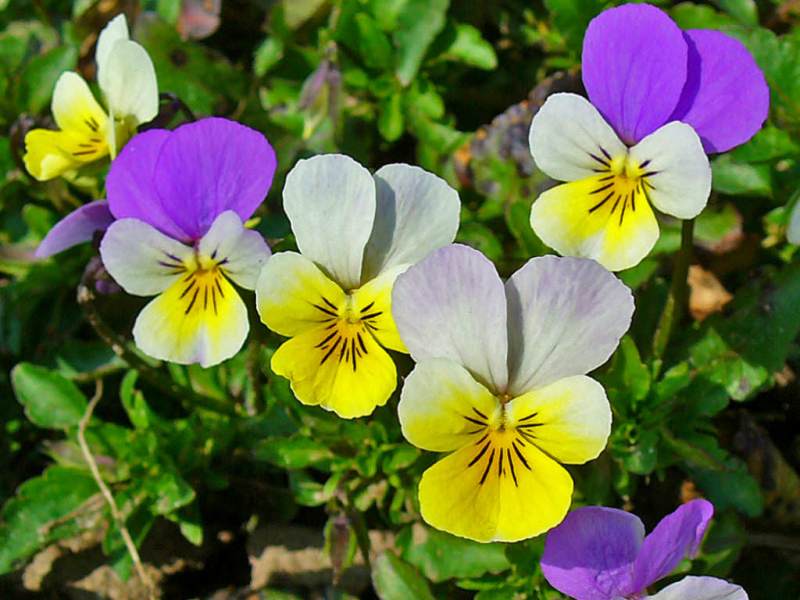
Viola tricolor (Violaceae)
Common name(s)Wild Violet; Pansy
How usedMedicinal
Activities: 307 Chemicals w/Activities: 19 Chemicals: 43
Activity:
Cancer-Preventive, Antioxidant, Antiinflammatory, Pesticide, Lipoxygenase-Inhibitor, Antibacterial, Antitumor, Apoptotic, Antiradicular, Hepatoprotective, Antidiabetic, Antispasmodic, Hypoglycemic, Antiperoxidant, Fungicide, Antihepatotoxic, Larvistat, Antiviral, Antiproliferant, Aldose-Reductase-Inhibitor, Antimutagenic, Vasodilator, Analgesic, Antiseptic, Antimelanomic, Anticataract, Antileukemic, Antiatherosclerotic, Antiherpetic, Allelochemic, Antifeedant, Antiarthritic, Mutagenic, Topoisomerase-II-Inhibitor, AntiHIV, Antiaggregant, Cyclooxygenase-Inhibitor, Allergenic, Anticariogenic, Antihypertensive, Antitumor-Promoter, Hypocholesterolemic, Ornithine-Decarboxylase-Inhibitor, Antihistaminic, cAMP-Phosphodiesterase-Inhibitor, Antiulcer, Antitumor (Breast), Anticancer, Antidermatitic, Antinitrosaminic, Quinone-Reductase-Inducer, Aldehyde-Oxidase-Inhibitor, Prostaglandin-Synthesis-Inhibitor, Colorant, Glucosyl-Transferase-Inhibitor, Antitrypanosomic, Tyrosine-Kinase-Inhibitor, Carcinogenic, Antiallergic, Cytotoxic, ….
*Reference
Stitt, P. A. Why George Should Eat Broccoli. Dougherty Co, Milwaukee, WI, 1990, 399 pp.
Planta Medica, 57: A110, 1991.
Planta Medica, 56(6): 695, 1990.
Jin, G-Z., Yamagata, Y., and Tomita, K.-i. 1989. Structure of Rutin Pentamethanol. Chem. Pharm. Bull. 38(2): 297-300, 1990.
Newall, C. A., Anderson, L. A. and Phillipson, J. D. 1996. Herbal Medicine – A Guide for Health-care Professionals. The Pharmaceutical Press, London. 296pp.
Ivorra, M.D., Paya, M., and Villar, A. 1989. A Review of Natural Products and Plants as Potential Antidiabetic Drugs. Journal of Ethnopharmacology, 27: 243-275, 1989.
Nigg, H.N. and Seigler, D.S., eds. 1992. Phytochemical Resources for Medicine and Agriculture. Plenum Press, New York. 445 pp.
Joyeux, M., Rolland, A., Fleurentin, J., Mortier, F., and Dorfman, P. 1989. Tert-Butyl Hydroperoxide-Induced Injury in Isolated Rat Hepatocytes: A Model for Studying Anti-Hepatotoxic Crude Drugs. Planta Medica 56(2): 171-173, 1990.
Lydon, J. & Duke, S., The potential of pesticides from plants, pp. 1-41 in Craker, L. & Simon, J., eds, Herbs, Spices & Medicinal Plants: Recent Advances in Botany, Horticulture, & Pharmacology, v. 4, Oryx Press, Phoenix, 1989, 267pp.
Economic & Medicinal Plant Research, 5: 225.
Okada,Y,et al.1995.Search for Naturally Occurring Substances to Prevent the Complications of Diabetes.II.Inhibitory Effect of Coumarin and Flavonoid Derivatives on Bovine Lens Aldose Reductase and Rabbit Platelet Aggregation.Chem Pharm Bull43(8):1385-1387
Phenolic Compounds in Food and Their Effects on Health. Antioxidants & Cancer Prevention. Huang, M.T., Ho, C.T. and Lee, C.Y. eds. 1992. ACS Symposium Series 507.ACS, Washington 402 pp.
Challem, J., Berkson, Burt, and Smith, Melissa Dianne. 2000. Syndrome X – The complete nutritional program to prevent and reservse insulin resistance. John Wiley & Sons, New York. 272 pp. $24.95
Werbach, M. 1993. Healing with Food. Harper Collins, New York, 443 pp.
Lydon, J. & Duke, S., The potential of pesticides from plants, pp. 1-41 in Craker, L. & Simon, J., eds, Herbs, Spices & Medicinal Plants: Recent Advances in Botany, Horticulture, & Pharmacology, v. 4, Oryx Press, Phoenix, 1989, 267pp.
Madaus, G. 1976. Lehrbuch der Biologischen Hilfmittel. Vol,. 1-3. 2862 pp. (+ 144 p. index). Georg Olms Verlag, Hildescheim. Reprint of 1938 Madaus.
Economic & Medicinal Plant Research, 5: 225.
Economic & Medicinal Plant Research, 6: 170.
Economic & Medicinal Plant Research, 6: 189.
Martindale’s 28th
Huang, K. C. 1993. The Pharmacology of Chinese Herbs. CRC Press, Boca Raton, FL 388 pp.
Pizzorno, J.E. and Murray, M.T. 1985. A Textbook of Natural Medicine. John Bastyr College Publications, Seattle, Washington (Looseleaf).
Jeffery B. Harborne and H. Baxter, eds. 1983. Phytochemical Dictionary. A Handbook of Bioactive Compounds from Plants. Taylor & Frost, London. 791 pp.
Jim Duke’s personal files.
Matsukawa, Y., et al. The Effect of Quercetin and Other Flavonoids on Cell Cycle Progresssion and Growth of Human Gastric Cancer Cells. Planta Medica, 56(6): 677, 1990
Viola tricolor (Violaceae)
Violet (Viola odorata)(Violaceae)
Viola tricolor (Violaceae)
Tinctures-Liquid Herbal Extracts & Benefits
Viola tricolor (Violaceae) is an effective expectorant that can work to clear the upper respiratory system of phlegm and relieve chronic and dry coughs, bronchitis, whooping cough, and asthma. Viola tricolor (Violaceae) also has a reputation for cleansing the blood, calming nerves, relieving painful headaches and insomnia.
Used for centuries as a blood purifier that gradually converts an unhealthy condition into a healthy state and facilitates a beneficial change in the body, frequently by cleansing and stimulating the efficient removal of waste products from the system. It also helps to eliminate toxins from the blood, and it is believed that the effects are quite impressive, even if the pollution of the blood has gone quite far.
This herb is generally thought to improve the body’s resistance to disease and infection. Known to remove toxins from the blood, Viola tricolor (Violaceae), has been used to alleviate abscesses, boils, pimples, psoriasis, eczema, acne and other skin problems caused by polluted blood. It is also thought to help ease scrofula and swollen glands.
Used for centuries to relieve pain and soothe the nerves, it is a calming herb that has been helpful in cases of sleeplessness, anxiety, hysteria, lamenting and other emotional and nervous disorders.
Viola tricolor (Violaceae) acts as a pain reliever (it is the natural forerunner of the synthetic aspirin), it has been used to relieve body pain (including rheumatic, limb, pain in the extremities and joint pains) and headaches (even severe headaches).
This herb’s traditional use was as a detoxifier, many herbalists think that Viola tricolor (Violaceae) actions as a blood cleanser may have some effects in warding off infection; uncontaminated blood may promote a higher resistance to disease and infection.
Used externally as an herbal antiseptic, Viola tricolor (Violaceae)disinfectant properties are often included in eyewashes and mouthwashes for infections of the eyes, mouth, and throat.
Ingredients: Viola tricolor (Violaceae), Structured Water, 96% Alcohol.
Non-Alcohol: Viola tricolor (Violaceae), Structured Water, Vegetable Glycerin.
All of our ingredients are Certified Organic, Kosher, or Responsibly Wildcrafted. No genetically modified organisms (GMO’s) are involved. All other products that are distributed by us meet our high-quality standards.
Instructions: Use 10-20 drops in juice or water, under the tongue or as desired. May be taken 3 times daily. Shake well. Store in cool dark place. Keep out of reach of children.
Contraindications: Large amounts of Viola tricolor (Violaceae) Herbal Supplement (many times the recommended dosage) may cause nausea and vomiting because of the irritant effects of saponins on the digestive system.
Disclaimer: The information presented herein by Herbal Alchewmy is intended for educational purposes only. These statements have not been evaluated by the FDA and are not intended to diagnose, cure, treat or prevent disease. Individual results may vary, and before using any supplements, it is always advisable to consult with your own healthcare provider.
TEINTURE MÈRE VIOLA ODORATA
Indications:
La teinture mère Viola odorata des laboratoires Boiron est un médicament homéopathique traditionnellement utilisé pour le traitement des rhumatismes et affections osseuses atteignant la partie supérieure du corps.
Ce médicament homéopathique convient essentiellement en cas de rhumatisme au niveau du muscle deltoïde.
Viola Odorata permet également d’atténuer les crises de rhumatisme au niveau des doigts ou des poignets.
Règles sur la posologie:
Dans l’ensemble des cas, les recommandations oscillent entre 50 et 150 gouttes par jour selon les personnes et la gravité des troubles.
Étant donné qu’il s’agit ici de doses pondérales, il est évident qu’une règle de proportionnalité doit être appliquée en fonction du poids de la personne.
En pratique, il convient de commencer avec des dosages relativement faibles afin de na pas déclencher des débâcles éliminatoires difficiles à gérer, et de monter ensuite progressivement le nombre de gouttes jusqu’à obtention de résultats tangibles et satisfaisants.
En outre, il est d’usage de répartir les posologies journalières sur 3 prises.
Soit une formulation:
0,75 x le poids = Y (Y étant le nombre de gouttes à prendre par jour).
Y / 3 = Z (Z étant la répartition des prises journalière 3 fois par jour).
Posologie usuelle:
*Adultes : 25 gouttes par prise à renouveler 2 par jour, une fois le midi et une fois le soir.
Ces posologies sont données à titre indicatif et peuvent varier selon le contexte clinique.
Médicament réservé à l’adulte.
Attention:
*Ce médicament contient de l’éthanol (alcool). Son utilisation est dangereuse chez les sujets alcooliques et doit être prise en compte chez les femmes enceintes ou allaitant, les enfants et les groupes à haut risque tels que les insuffisants hépatiques ou les épileptiques.
*Ce médicament doit être utilisé pendant une courte période car il risque de provoquer à long terme des thromboses (formation de caillot).
Mode d’administration:
*Voie orale.Voie cutanée (voie dermale), Timbre transdermique,
*Prendre les gouttes dans un peu d’eau, de préférence à distance des repas.
*À garder quelques instants dans la bouche avant d’avaler.
Conseils d’utilisation :
*Tournez ¼ de tour à droite ou à gauche pour mettre la pompe en position « ouverte ».
*Lors de la première utilisation, amorcez en appuyant 3 fois à fond. 1 pression = 50 gouttes.
*Refermez la pompe en la mettant en position « fermée » (1/4 de tour).
Contre-indications:
*Allergie à l’un des constituants de ce médicament.
*Enfant.
*Demander un avis médical pour le femme enceinte ou allaitante.
Pour de plus amples informations sur les contre-indications, les mises en garde, les précautions d’emploi, les interactions médicamenteuses, les effets indésirables, vous devez consulter votre médecin ou contacter les pharmaciens du site parapharmacie-chezmoi.fr.
Composition: Viola odorata TM, éthanol, eau purifiée.
Conditionnement: Flacon de 125 ml avec pompe doseuse.
Conservation : Un léger trouble peut apparaître, sans incidence sur la qualité du médicament.
Si vos symptômes persistent et/ou si vous ressentez des effets indésirables vous devez consulter votre médecin.